


DoorDash is buying Instacart for $17 billion: what changes for restaurants
DoorDash agreed to buy Instacart for about $17 billion. The deal is about grocery, so here is what it changes for restaurants and catering today.

Key takeaways
- DoorDash agreed on October 29, 2026 to buy Instacart for about $17 billion, with closing expected at the end of 2027 or the first half of 2028.
- The announcement is about grocery and does not mention restaurant fees, so nothing changes in a restaurant's orders today.
- It is the second marketplace sale announced in a month, after Uber's plan to buy ezCater. Count your orders by channel before any new terms arrive.
DoorDash agreed on October 29, 2026 to buy Instacart for about $17 billion. For a restaurant, nothing changes in your orders today: the deal is about grocery, it still needs shareholder and regulatory approval, and the companies expect to close it at the end of 2027 or the first half of 2028.
What did DoorDash and Instacart announce?
The two companies announced the deal on October 29, 2026. These are the terms in their press release and in DoorDash’s filing with the SEC.
| Item | What the announcement says |
|---|---|
| Price | $65.00 per Instacart share, an equity value of about $17 billion, a 26% premium to Instacart’s October 22, 2026 close |
| Payment | At least 75% cash, with DoorDash stock capped at 25% of the total |
| Timing | Expected to close at the end of 2027 or the first half of 2028 |
| Approvals | Instacart shareholders, the U.S. antitrust waiting period, and other regulators, including in Canada and Israel |
| Restaurants | Mentioned in passing, as restaurant orders at peak times that could help Dashers and Shoppers earn more. Fees and commissions are not mentioned |
The pitch goes mostly to grocers. The release says grocers of all sizes could use DoorDash’s delivery network and Instacart’s technology on stores' own websites. It also says Instacart customers could shop at more than 50,000 additional stores, on top of the nearly 100,000 on Instacart today.
Is this a restaurant story or a grocery story?
It is mostly a grocery story. The restaurant angle comes from the pattern around it.
Restaurant Business reported on October 27 that the deal would “continue to concentrate the food delivery business into the hands of just a few large players.” It cited Consumer Edge card data that puts DoorDash at about 59% of delivery app spending in the third quarter of 2026. That figure covers every delivery category, groceries included.
The same report notes that Uber announced plans to buy ezCater, the workplace catering marketplace, for $2.3 billion in cash. Two marketplaces have now announced a sale within a month of each other. Nobody has published what happens to restaurant terms afterward, if anything does.
What does it change for a restaurant that sells catering or delivery?
Our take: nothing in your orders today, and a few things worth doing now. Fast Casual’s October 27 analysis argues that fewer, larger platforms likely reduce operators' leverage and make a direct catering channel more valuable. The piece calls its own read speculation, and ours is too, because no terms have been published.
Three steps cost little and pay off whichever way the terms go.
- Count your orders by channel for the last 90 days. Separate each marketplace, your own site, and phone or email. If one marketplace is most of your catering, you want that number before a renewal notice arrives.
- Compare what you paid in fees on your next statement with the one before it, and keep every notice from your marketplaces. Nothing in the announcements mentions fees, so a change would show up in the paperwork first.
- Give regulars a place that is yours: an online ordering page with your name on it, payment going into your own POS or account, and the order history in your hands. We covered how in commission-free online ordering and in how to get ezCater orders into Clover.
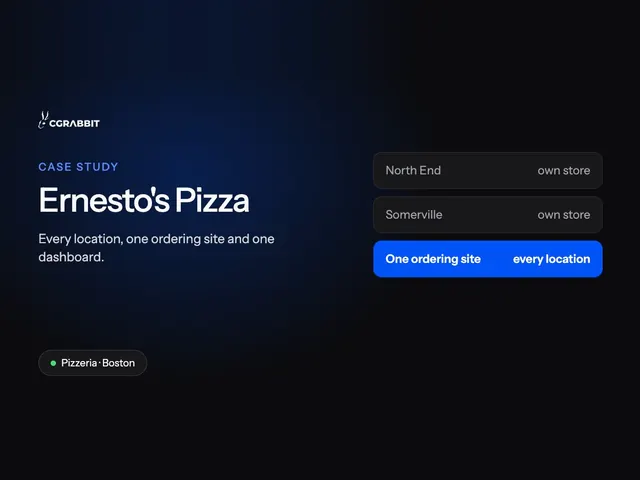
Our take, from what we build: on the dashboards we make, such as the one for Winfield Street Coffee, orders from the restaurant’s own site and ezCater orders show up on the same screen. We work with ezCater’s API for that. A restaurant that sells in both places keeps one view of its catering, whoever ends up owning the marketplace.
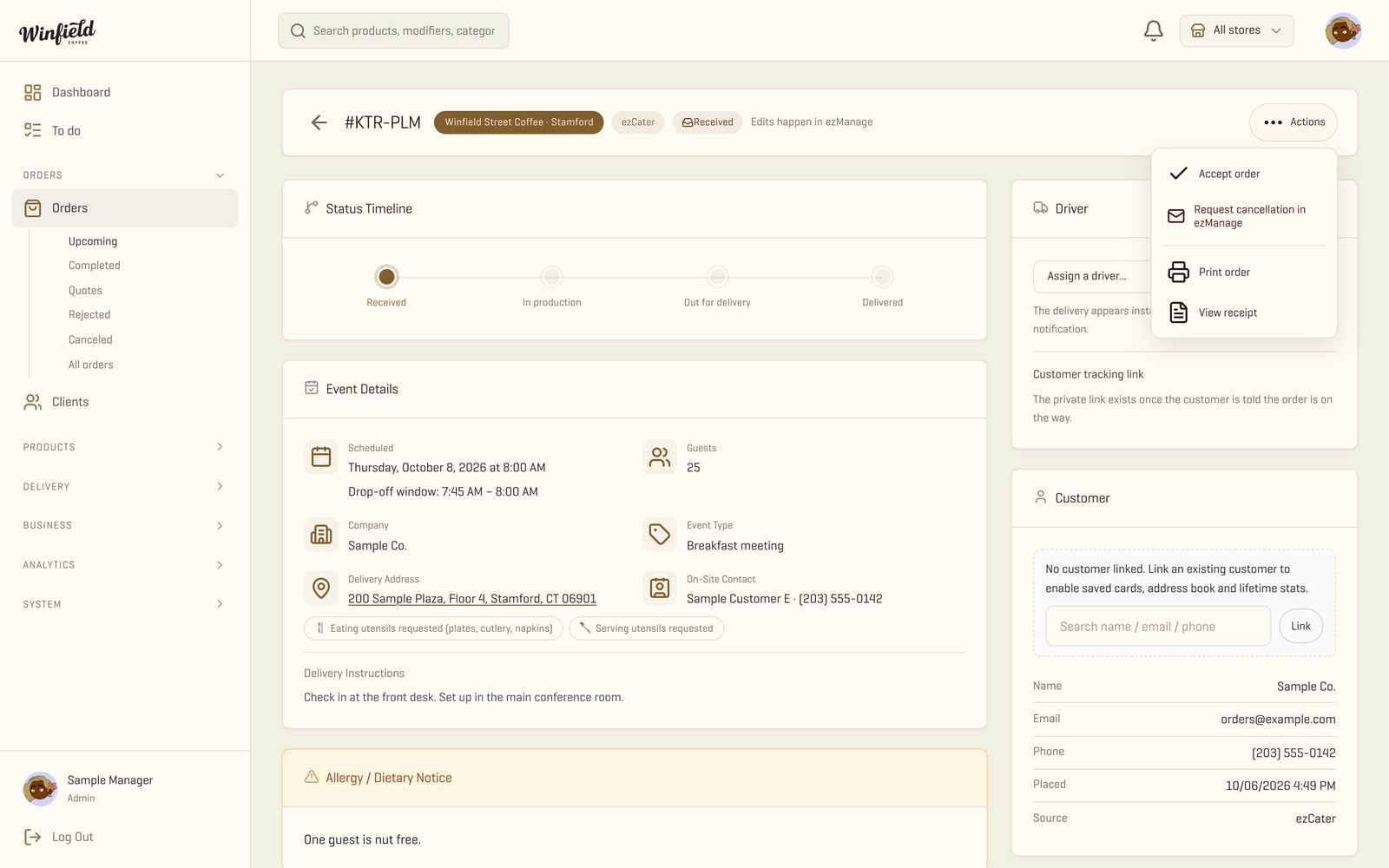
Marketplaces still bring buyers a restaurant’s own site rarely reaches, so keep selling there. The Winfield Street Coffee case shows how the two channels sit side by side.
What is still unknown?
- Terms for restaurants. The announcements do not say whether fees, rules or contracts for restaurants change after closing.
- Regulatory review. The deal needs the U.S. antitrust waiting period to end and other approvals, including in Canada and Israel.
- The ezCater API. Nothing we read says it changes, and any change would be announced by Uber and ezCater.
Frequently asked questions
Does the DoorDash and Instacart deal change anything for my restaurant today?
No. The companies expect to close at the end of 2027 or the first half of 2028, after shareholder and regulatory approvals. Their announcement does not mention restaurant fees or commissions.
Has the Uber and ezCater deal closed?
The sources we read describe it as announced, not closed. Restaurant Business reported on October 27, 2026 that Uber announced plans to buy ezCater for $2.3 billion in cash.
Will ezCater integrations keep working after the Uber deal?
Nothing in the announcements we read mentions the ezCater API. The dashboards we build take ezCater orders through that API, and any change would come from Uber and ezCater, so ask your software provider what they have heard.
What counts as an ordering channel I own?
An ordering page with your name on it, payment going into your own POS or account, and an order history you hold.
Sources
- DoorDash and Instacart, press release "DoorDash to Acquire Instacart to Help Local Stores Win" (SEC Form 8-K, Exhibit 99.1) · Oct 29, 2026
- DoorDash, release filed with the SEC (Form 8-K, Exhibit 99.1) · Oct 29, 2026
- Restaurant Business via Nation's Restaurant News, "DoorDash is nearing a deal to buy Instacart, report says" · Oct 27, 2026
- Fast Casual, "First ezCater, now Instacart: delivery's consolidation wave keeps rolling" · Oct 27, 2026
Comments